When specifying timber for premium architectural projects, the origin of the material dictates its performance, aesthetic consistency, and sustainability credentials. Single-origin French oak from Burgundy represents the pinnacle of timber specification. Unlike mixed-batch products that blend timber from various regions and mills, single-origin oak guarantees a level of quality and uniformity that is essential for high-end interiors. For architects and designers, understanding the provenance of French oak is critical to delivering exceptional results.

Provenance is not merely a marketing term; it is a fundamental indicator of timber quality and consistency. Knowing exactly where your timber comes from allows for precise specification and predictable outcomes.
Most “French oak” available in the Australian market is a blend of timber sourced from multiple forests and processed by different mills. This fragmented supply chain introduces significant variables. Different growing conditions, soil types, and milling techniques result in timber with varying densities, grain structures, and moisture contents. When this mixed-batch timber is installed, these inconsistencies manifest as unpredictable tonal variations and uneven performance, compromising the design intent.
For architects, specifying mixed-batch timber introduces unnecessary risk. The lack of traceability means that the final installed product may not align with the initial samples provided. This inconsistency is particularly problematic in large-scale projects where uniformity across expansive surfaces is required. By contrast, single-origin timber eliminates these variables, providing a reliable material foundation.
Single-origin French oak is sourced from a specific, defined geographic location — in Cheneoak’s case, the old-growth forests of Burgundy. Because the timber grows in a uniform climate and soil profile, it develops consistent characteristics. The grain is tighter, the colour is a uniform blond, and the density is predictable. Furthermore, when the timber is processed by our exclusive French mill partner, the drying and grading processes are strictly controlled.
This level of control ensures that every board meets exacting standards. When an architect specifies single-origin French oak, they can be confident that the timber delivered to the site will match the approved sample. This consistency is vital for achieving a cohesive aesthetic, particularly when specifying timber for multiple applications within the same project, such as flooring, stair treads, and wall cladding.
The forests of Burgundy are globally recognised for producing some of the finest oak available. These forests have been meticulously managed for centuries, allowing the oak trees to mature slowly. This slow growth is essential for developing the tight grain and exceptional stability that characterises premium French oak. The timber harvested from these old-growth forests possesses a structural integrity that younger, faster-growing timber simply cannot match.
Specifying timber from Burgundy’s old-growth forests also connects a project to a rich heritage of sustainable forestry. The careful management of these resources ensures that the timber is not only of the highest quality but also environmentally responsible. For premium interiors, the narrative of sourcing timber from such esteemed origins adds a layer of authenticity and value to the design.
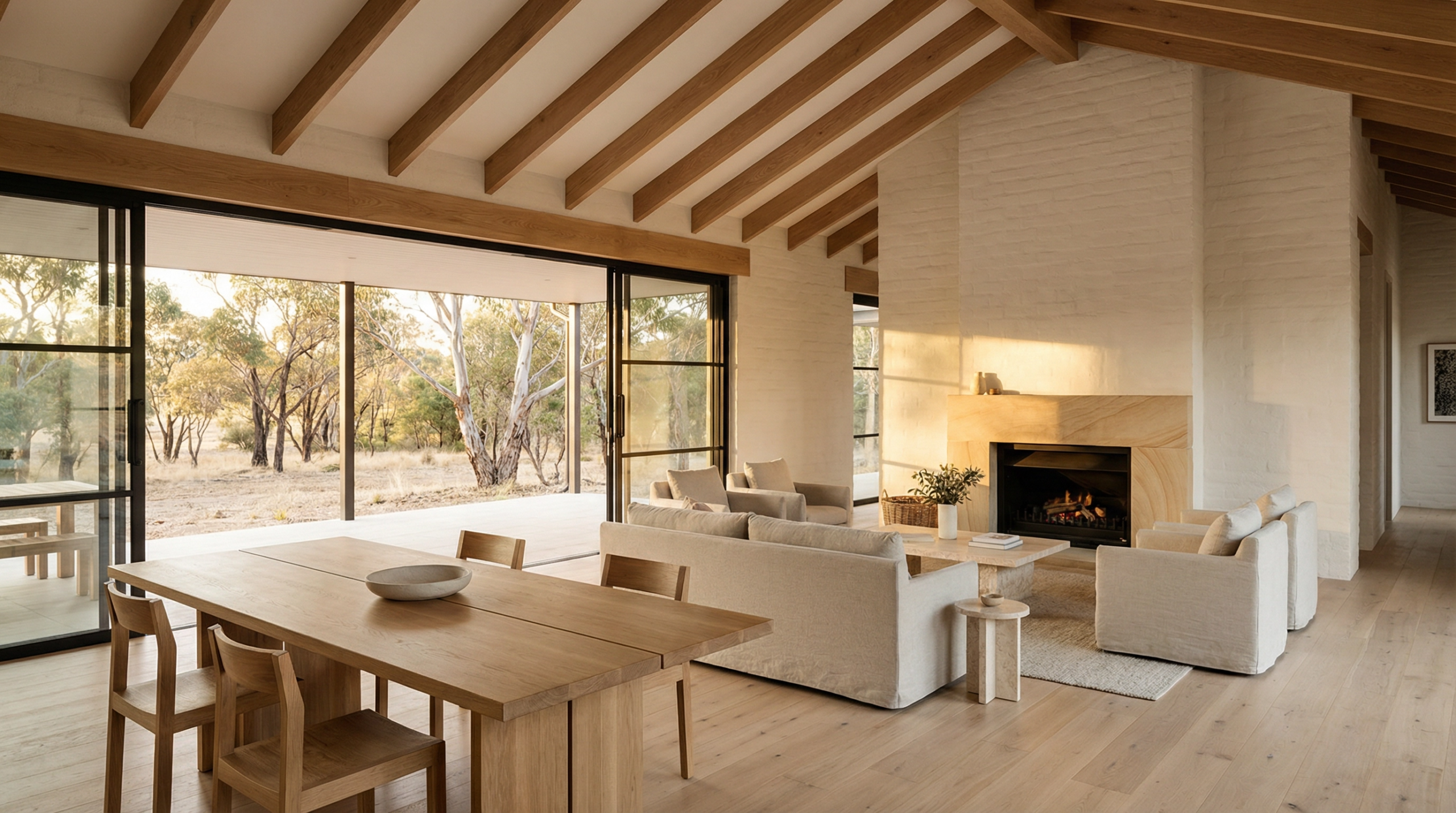
Beyond its aesthetic appeal, single-origin French oak offers significant technical advantages. Its stability, grading consistency, and sustainability credentials make it the preferred choice for rigorous architectural specification.
The slow growth of Burgundy oak results in a dense, stable timber that performs exceptionally well in interior applications. Stability is a critical factor in timber specification, particularly in Australia’s varied climate. Single-origin French oak exhibits minimal movement, reducing the risk of cupping, warping, or gapping after installation. This stability is further enhanced by the precise kiln-drying processes employed by our exclusive French mill partner.
For specifiers, this means that single-origin French oak can be confidently used in demanding environments, including over underfloor heating systems or in areas with fluctuating humidity. The predictable performance of the timber ensures the longevity of the installation, protecting the integrity of the design and the investment of the client.
Grading is a crucial aspect of timber specification, determining the visual character of the installed product. With mixed-batch timber, grading can be inconsistent, leading to unexpected variations in the frequency of knots and natural features. Single-origin French oak, processed by a single mill, benefits from rigorous and uniform grading standards. This ensures that the specified grade — whether prime, classic, or rustic — is delivered consistently across the entire order.
This consistency is particularly important for achieving a refined, architectural finish. The uniform blond tone of Burgundy oak provides a versatile canvas for interior design, complementing a wide range of palettes and materials. The predictable grading allows architects to precisely control the visual texture of the space, ensuring that the timber enhances rather than detracts from the overall design.
Sustainability is a non-negotiable requirement in modern architectural specification. Single-origin French oak from Cheneoak is fully PEFC-certified, providing an unbroken chain of custody from the forest to the site. This certification guarantees that the timber is sourced from sustainably managed forests that meet strict environmental, social, and economic standards.
For architects, specifying PEFC-certified timber simplifies compliance with green building standards and client sustainability mandates. The transparent supply chain of single-origin timber provides verifiable proof of its environmental credentials. This level of assurance is impossible to achieve with mixed-batch timber, where the origins of individual boards are often untraceable.
The consistency of single-origin French oak enables a holistic approach to interior specification, allowing architects to seamlessly integrate timber across multiple applications.
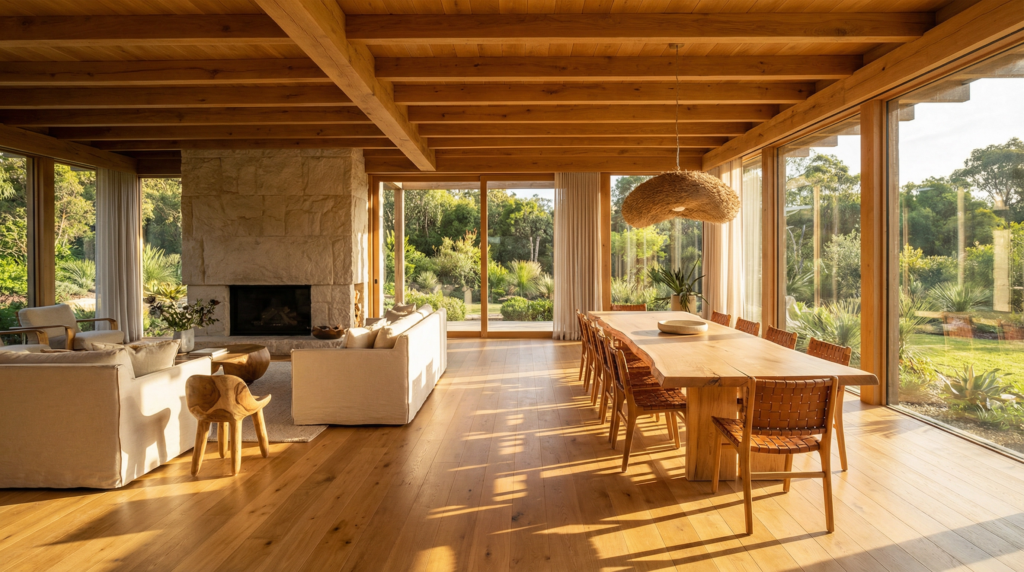
Cheneoak provides comprehensive support to ensure your specifications are met with precision. From initial selection to final installation, we’re with you every step of the way.
One of the most significant challenges in interior design is achieving tonal consistency when using timber for different elements, such as flooring, stair treads, and custom joinery. When these elements are sourced from different suppliers or mixed batches, the resulting tonal clashes can disrupt the visual harmony of the space. Single-origin French oak solves this problem entirely.
Because all the timber originates from the same forest and is processed by the same mill, the colour and grain are inherently consistent. This allows architects to specify flooring, stair treads, and wall cladding from the same source, ensuring a perfect match. The result is a seamless, unified aesthetic that elevates the perceived quality of the interior.
Sourcing timber for multiple applications from different suppliers is a complex and time-consuming process. It requires managing multiple lead times, coordinating deliveries, and mitigating the risk of mismatched materials. Specifying single-origin French oak from a single exclusive supplier streamlines this process significantly.
Cheneoak provides a comprehensive solution for whole-room specification. Through our Specifier Portal, architects can access BIM data, NatSpec clauses, and technical documentation for all our products in one place. This centralised approach simplifies the specification workflow, reducing administrative burden and ensuring that all timber elements are perfectly coordinated.
Premium single-origin French oak is a scarce resource. The meticulous management of Burgundy’s forests and the rigorous selection process mean that supply is inherently limited. Cheneoak brings in one container per month, and this stock is allocated exclusively to registered specifiers.
For architects, securing access to this exclusive supply is essential for delivering uncompromising quality. By registering for the Specifier Portal, professionals gain priority access to incoming shipments, ensuring that their projects are not delayed by material shortages. This exclusive access guarantees that the specified timber will be available when needed, providing certainty in project planning and construction timelines.

